 Trip Plan Viewer
If you've ever stood at the gate thinking "wait, my charger," that wasn't bad luck. Forgetting things follows a pattern. The items you use every single day are, paradoxically, the easiest to leave behind — your charger, your glasses, your everyday medication all live permanently next to an outlet or in a drawer, so your brain never registers them as "things I need to pack." Sunscreen or an umbrella, on the other hand, feel unfamiliar enough that you consciously remember to grab them. What you need isn't a better memory — it's a habit of sorting your belongings by type. Airport-specific headaches like checked-versus-carry-on allocation or security rules are covered elsewhere; this piece is purely about what to pack.
Split your packing list into three tiers
Before you start packing, sorting items into three tiers makes it obvious what to grab first and what you can leave behind.
- Tier A — Without this, the trip can't happen. Passport or ID, credit cards, your flight (a screenshot of the e-ticket confirmation), and booking confirmations. Without these, you can't even leave.
- Tier B — Without this, money solves the problem. Toiletries, clothes, an umbrella. You can just buy these at your destination — though keep in mind local options may be pricier or not quite to your taste.
- Tier C — Without this, it's just inconvenient. Hobby gear, backup electronics, comfort items. They make the trip better but aren't essential to it happening at all.
When you need to cut weight, cut Tier C first. Pack in the reverse order, though, and you'll end up stuffing comfort items into your suitcase first, then scrambling to fit Tier A essentials in at the last minute.
The items "fixed" in your home are the ones you forget most
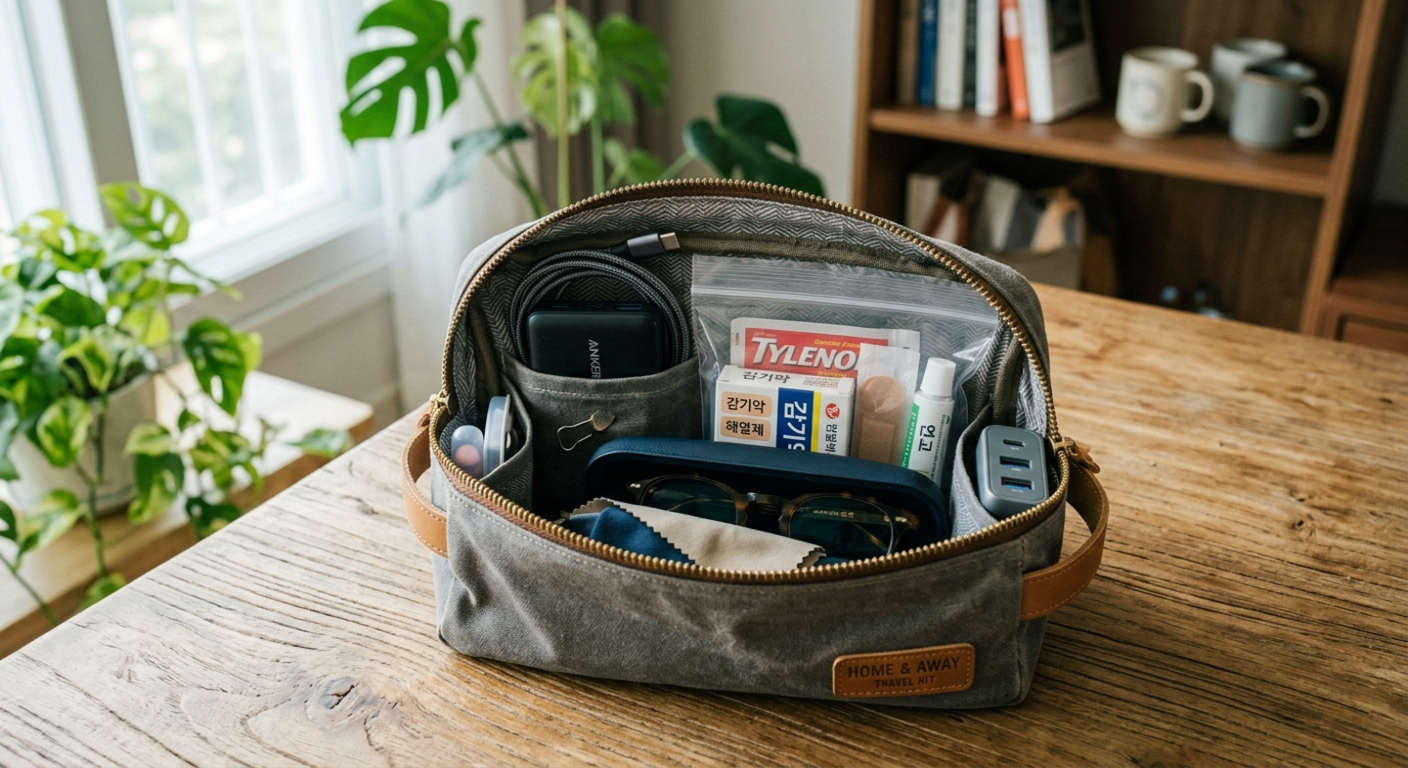
No matter how carefully you write a checklist, one category keeps slipping through: chargers, power banks, glasses or contacts, everyday medication, earbuds, nail clippers, razors. They all share one trait — they live in a fixed spot at home, so you've never actually had to "pack" them before. Clothes and toiletries get consciously prepared for the trip, which is exactly why you remember them. This category, despite being used daily, has never been relocated, so the part of your brain doing the packing doesn't even register that it exists. The fix is simple: track this category as its own separate list, and do one final check right before you zip the suitcase shut.
What changes depending on the type of trip
Packing doesn't scale up evenly with trip length. Toiletries and chargers stay roughly fixed regardless of how many days you're away, while underwear and socks scale directly with the number of days. Miss that distinction and you end up packing triple the toiletries for a 4-day trip for no reason.
| Item | Domestic, 1 night | International, 3 nights | Extended (2+ weeks) |
|---|---|---|---|
| Underwear & socks | One per day | One per day | Enough for a laundry cycle (3–5 days' worth) |
| Toiletries | Minimal, decanted | One full travel-size set | Plan to buy locally |
| Chargers & power bank | One set | One set (consider a power strip) | One set plus spare cables |
| Extra clothing | 1 outfit | 2–3 outfits | 3–4 mix-and-match outfits, plus laundry |
| Laundry plan | Not needed | Optional | Essential (mesh bag, detergent) |
What to add by season
- Summer — Sunscreen, insect repellent, a cooling towel. Sunscreen formulated for sensitive skin varies a lot by brand in texture and finish, so it's genuinely hard to find the right one once you've landed.
- Winter — Hand cream or lip balm, anti-static spray, thermal base layers. Thick base layers sized for a smaller frame often don't match local sizing overseas, so it's safer to bring your own.
- Rainy season — Waterproof shoe covers, spare socks (for when your shoes get soaked anyway), and fast-drying fabrics. Umbrellas sold at tourist-spot street stalls tend to break easily, so it's worth bringing a sturdy folding one from home.
Medication and first-aid supplies
Pack a basic first-aid kit — pain relievers, digestive aids, anti-diarrheal medication, wound antiseptic, and motion sickness pills — pre-portioned into small containers. Prescription medication is the tricky part. When carrying prescription drugs internationally, you'll often need the prescription itself or a doctor's letter in English alongside the medication, since immigration or customs may need to verify what it is and what it's for. Which medications are allowed, and whether a doctor's letter is mandatory, varies by country and changes frequently, which is exactly why we're not giving you a definitive list here — always check your home country's travel advisory site or the destination country's embassy guidance before you leave.
10 things people forget most
Instead of the usual "packing list" staples like toothbrushes and towels, here are the things people actually wished they'd brought.
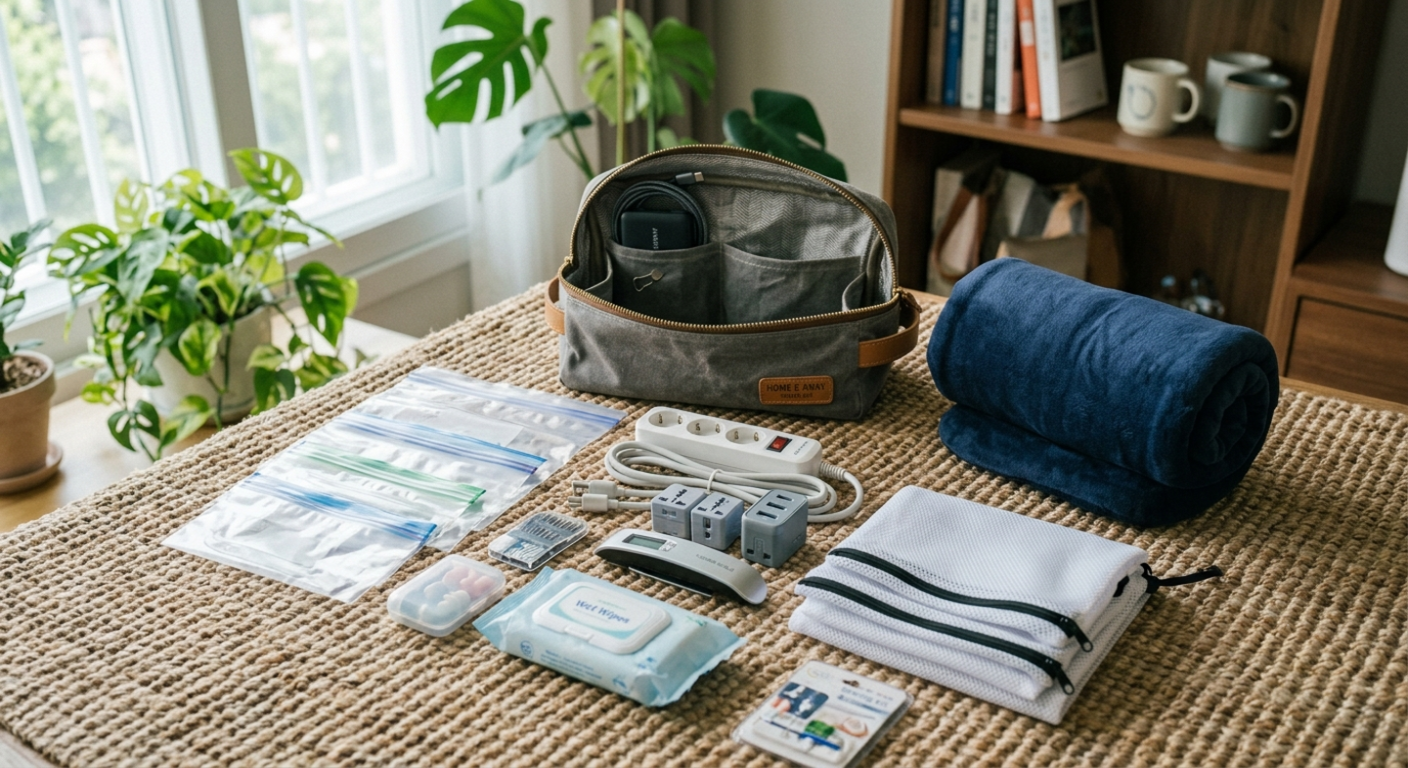
- Extra zip-lock bags — You'll keep needing them to separate wet clothes, liquids, and receipts.
- A foldable tote bag — Saves suitcase space for groceries near your hotel or last-minute shopping before flying home.
- A power strip — Eliminates the fight over outlets when your hotel room has too few, or your group is large.
- A neck pillow — Makes a noticeable difference in how rested you feel after an overnight bus or long train ride.
- A mesh laundry bag — Keeps worn clothes separated from clean ones and your suitcase more hygienic.
- Small bills in cash — For street vendors that don't take cards, tips, and vending machines.
- A spare pair of glasses (or your prescription written down) — If you lose or break them, getting a new prescription filled abroad is a hassle.
- A pen — For filling out immigration forms; surprisingly hard to find one on the plane.
- Check your phone's flashlight beforehand — Confirm you can handle a power outage or nighttime walk without a separate flashlight.
- Your accommodation's address written in the local language — A backup for showing a taxi driver when your phone battery dies.
Printable final checklist
Check items off as you pack, then save the checklist as an image to print or share once you're done.
Frequently Asked Questions
How many days' worth of toiletries should I pack, regardless of trip length?
Whether your accommodation provides amenities matters more than the number of days. At a hotel, pack just a minimal decanted set; at a guesthouse or long-term stay, pack more generously.
Does packing differ between a suitcase and a backpack?
The items themselves are almost identical. What changes is weight distribution and how accessible things are. Items you'll reach for often — chargers, medication — are better kept at the top or in a separate pouch either way.
What do I need to bring prescription medication on a flight?
It's safest to carry the prescription or a doctor's letter in English along with the medication. Allowed ingredients and required documents vary by country, so check your home country's travel advisory site or the destination's embassy guidance before departure.
What's the fastest way to cut down on luggage?
Start with Tier C from the 3-tier system — the items that aren't essential to the trip happening at all. Choosing clothes in colors that mix and match lets you pack fewer pieces without narrowing your outfit options.
A packing list stops being useful the moment it's managed separately from your itinerary — which is exactly why a checklist made a few days before departure so often ends up buried in a cloud notes app somewhere. Keep your itinerary and packing list on the same screen in Trip Plan Viewer, and checking your schedule naturally means seeing your packing list too.